
India’s dairy industry functions at a scale that is unparalleled anywhere in the world, supplying milk and dairy products to millions of households daily and sustaining a vast informal workforce. Despite this economic prominence, the sector remains largely unregulated in practice, with field documentation from multiple dairy clusters revealing persistent legal non-compliance, institutional neglect, and routine violations of animal welfare, food safety, and environmental protection laws. These failures are not isolated aberrations. Instead, they reflect a systemic pattern of operations that persist beyond statutory oversight and accountability.
The cumulative effect of these practices has been the creation of a dairy ecosystem that externalises cruelty, pollution, and public health risks while continuing to feed the formal market. What follows is an evidence based portrait of on ground realities, underscoring how a lack of enforcement has normalised illegal conduct across India’s dairy landscape.
I. Animal Welfare Violations: Neglect and Confinement:
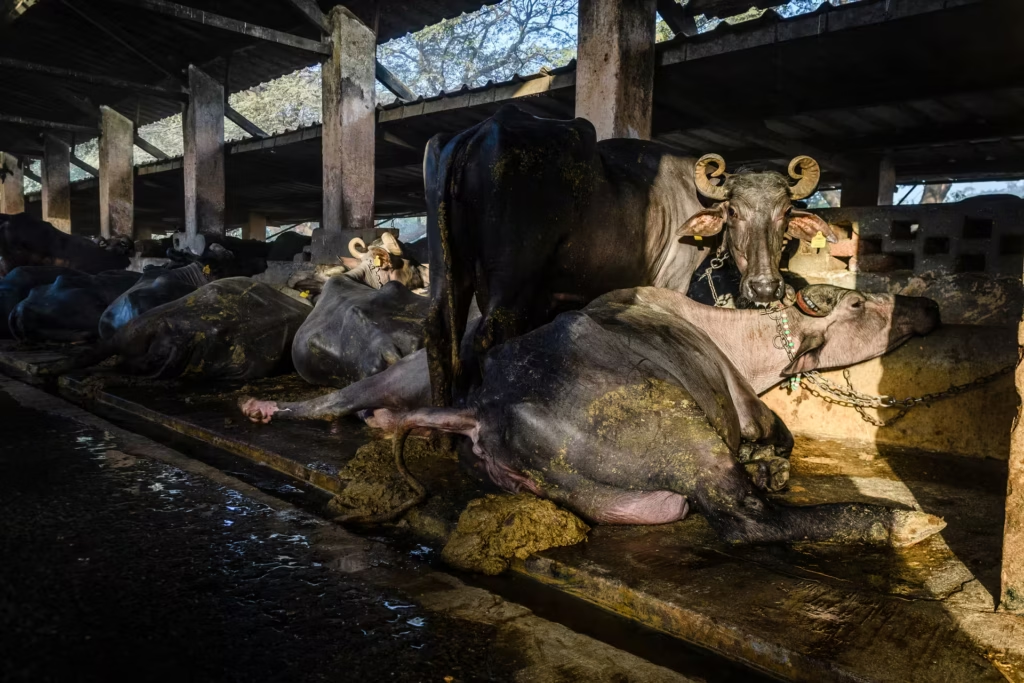
Across unregulated dairy units, cattle commonly endure conditions that contravene basic principles of animal welfare. Overcrowding is pervasive, with cows and buffaloes tethered for extended durations in spaces that severely restrict mobility. Enclosures are frequently dark, poorly ventilated, and unhygienic, forcing animals to lie, stand, or shift in their own excreta.
Such confinement precipitates physical injury, heat stress, immunosuppression, and behavioural distress. Repeated negative handling produces discernible fear responses in cattle, including flinching, freezing, and avoidance, indicative of coercive practices such as forceful restraint, intimidation, and painful interventions. Compounding these injuries, diseased or debilitated animals are often left unattended without veterinary care. Calves appear malnourished, and young animal mortality is treated as routine rather than an exceptional event. Carcasses of deceased animals are sometimes left exposed, creating severe biosecurity and ethical concerns.
Practices such as hot branding continue even though non-invasive identification methods are available. Such deliberate infliction of pain has no legitimate necessity and constitutes clear cruelty under law. These conditions flagrantly breach provisions of the Prevention of Cruelty to Animals Act 1960 related to confinement, neglect, abandonment, and causing unnecessary pain, revealing a pervasive absence of inspections, prosecutions, or deterrent penalties.
II. Environmental Violations: Pollution and Public Health Risk:
Unregulated dairies have become de facto pollution hubs. Vast quantities of dung, urine, wash water, and fodder waste are generated daily without systematic waste management. Instead of treatment or recycling, effluent is routinely dumped in open areas or drains, creating unsanitary conditions and chronic contamination.
Open drains carrying untreated dairy effluent are commonplace, posing substantial risks of injury, disease transmission, and groundwater contamination. Stagnant waste mixed with water provides an ideal breeding ground for vectors, and decomposing organic matter emits noxious gases such as ammonia, methane, and hydrogen sulphide. These emissions compromise respiratory health for humans and animals alike, while exacerbating greenhouse gas accumulation.
Water usage is excessive and unregulated, with continuous washing of cattle and enclosures resulting in wastewater runoff that infiltrates soil and local water bodies. The absence of recycling or treatment mechanisms directly contravenes environmental safeguards. The location of many dairy operations within or adjacent to residential areas further exposes communities to foul odour, airborne pollutants, zoonotic disease risk, and degraded living conditions.
These practices violate the Water (Prevention and Control of Pollution) Act 1974, the Air (Prevention and Control of Pollution) Act 1981, the Environment (Protection) Act 1986, and the CPCB Guidelines for Environmental Management of Dairy Farms and Gaushalas 2021, all of which mandate waste treatment, adequate spacing, ventilation, and siting compliance. The persistence of these violations underscores regulatory abdication rather than mere absence of regulation.
III. Food Safety Failures: Contamination at Source:
Failures in food safety often originate at the point of production in unregulated dairies. Structural deficiencies such as broken flooring, poor drainage, inadequate lighting, and lack of potable water compromise milk hygiene from the outset. Milking frequently occurs in areas contaminated by dung, flies, and stagnant waste.
Improper handling is widespread. Utensils are inadequately cleaned, and milk is sometimes diluted using contaminated water. The prevalence of insects and other vectors near collection and storage points creates high risks of microbial contamination. Human hygiene breaches occur routinely, with handlers bathing or washing within dairy premises.
Beyond observable hygiene failures, the physiological state of dairy animals significantly influences milk quality. Chronic stress, untreated injuries, disease, and malnutrition can alter milk composition and increase the likelihood of antibiotic residues and pathogens entering the supply chain. These risks remain largely invisible to consumers yet carry profound public health implications. Such conditions violate the Food Safety and Standards Act 2006 and the Food Safety and Standards (Licensing and Registration of Food Businesses) Regulations 2011, which require sanitary infrastructure, hygienic handling, and safe water usage.
IV. Mastitis, A Hidden Epidemic:
Amid these systemic failures, mastitis: an inflammation of the mammary gland, is one of the most frequent and costly diseases affecting dairy cattle worldwide and within India. Globally, the pooled prevalence of subclinical mastitis is estimated at around 42% with clinical mastitis at approximately 15% underscoring its ubiquity across dairy herds. In India, meta-analytical data suggest that subclinical mastitis affects roughly 45% of dairy cattle with clinical cases at roughly 18%.
Subclinical mastitis often goes undiagnosed because it lacks overt symptoms but significantly reduces milk production and quality, contributing to extensive economic loss. In India, mastitis has been estimated to impose annual costs in the hundreds of crores of rupees on the dairy sector, reflecting lost milk yield, treatment expenses, and premature animal culling.
The high prevalence of mastitis is directly linked to the hygienic failures prevalent in unregulated dairies. Contaminated milking environments, inadequate udder hygiene, and untreated animal infections amplify the incidence and severity of mastitis, embedding invisible risks into the everyday milk supply that reaches consumers.
V. Absence of Mandatory Licenses and Regulatory Approvals:
One defining feature of unregulated dairies is their operation without legally mandated approvals. The majority function without:
- Licence or registration from the Food Safety and Standards Authority of India (FSSAI) for milk production and handling.
- Consent to Establish and Consent to Operate from the appropriate State Pollution Control Board.
- Municipal or local body trade licences.
- Compliance with animal husbandry and welfare registration requirements.
Operating outside these frameworks allows dairies to evade inspections, bypass compliance costs, and externalise environmental and welfare harms. This vacuum enables illegal practices to persist while formal supply chains continue to source milk without accountability.
VI. Collateral Impacts: Zoonotic Risk and Neglected Animal Populations:
Unregulated dairy clusters also create secondary welfare and public health risks. Stray and semi-owned dogs often inhabit these clusters, typically underfed, unsterilised, and unvaccinated. The absence of effective municipal Animal Birth Control implementation increases the risk of zoonotic disease transmission between dogs, livestock, and humans, reflecting broader governance gaps in public health and animal management.
VII. Systemic Consequences of Regulatory Failure:
The cumulative consequences of unregulated practices extend far beyond isolated incidents. They include:
- Systemic animal cruelty normalised through neglect.
- Chronic environmental degradation and contamination.
- Embedded food safety risks within everyday milk consumption.
- Erosion of the rule of law, where statutory protections exist only on paper.
These outcomes are not accidental but are structurally produced by weak enforcement, fragmented oversight, and institutional tolerance of non-compliance.
VIII. The Imperative for Enforcement and Structural Reform:
India possesses comprehensive legal frameworks governing dairy operations. What is lacking is coordinated and consistent enforcement. Addressing systemic failure requires:
- Comprehensive mapping and registration of all dairy units.
- Regular, unannounced inspections by multi-departmental authorities.
- Strict penalties, including closure, for repeat violations.
- Enforcement of CPCB siting norms to eliminate dairies from residential zones.
- Strengthening municipal and veterinary infrastructure.
- Accountability mechanisms for milk aggregators and cooperatives sourcing from illegal units.
Without such measures, violations will continue to be absorbed into the cost structure of dairy production, while animals, ecosystems, and communities bear the burden.
Conclusion:
The realities documented across dairy units in India reveal a sector operating in sustained violation of animal welfare, environmental, and food safety laws. These are not marginal deviations but systemic features of an industry permitted to function without oversight. Reform must advance beyond advisories toward enforceable accountability.
Ensuring compliance in the dairy industry is not merely a regulatory obligation. It is essential for protecting animals, safeguarding public health, and restoring environmental integrity. Without decisive intervention, unregulated dairies will remain sites where legality, ethics, and sustainability are routinely compromised.
References and Bibliography:
- Food Safety and Standards Authority of India (FSSAI), Food Safety and Standards Act, 2006. Government of India.
- New Delhi: Ministry of Health and Family Welfare.
- Food Safety and Standards Authority of India (FSSAI). Food Safety and Standards (Licensing and Registration of Food Businesses) Regulations, 2011. Government of India.
- Central Pollution Control Board (CPCB), Guidelines for Environmental Management of Dairy Farms and Gaushalas., Government of India, 2021.
- Prevention of Cruelty to Animals Act, 1960. Ministry of Law and Justice. Government of India.
- Water (Prevention and Control of Pollution) Act, 1974. Ministry of Environment, Forest and Climate Change. Government of India.
- Air (Prevention and Control of Pollution) Act, 1981. Ministry of Environment, Forest and Climate Change. Government of India.
- Environment (Protection) Act, 1986. Ministry of Environment, Forest and Climate Change.
- Sharma, N., Singh, N. K., & Bhadwal, M. S. “Relationship of Somatic Cell Count and Mastitis: An Overview.” Asian-Australasian Journal of Animal Sciences, Vol. 24, No. 3, 2011, pp. 429–438.
- Kumari, T., Bhakat, C., & Singh, R. R. “A Review on Subclinical Mastitis in Dairy Cattle: Prevalence, Economic Losses, and Control Strategies.” Indian Journal of Dairy Science, Vol. 73, No. 4, 2020.
- Dua, K. “Incidence, Aetiology and Economic Impact of Mastitis in Indian Dairy Animals.” Bhartiya Krishi Anusandhan Patrika, 2019.
- Ruegg, P. L. “A 100-Year Review: Mastitis Detection, Management, and Prevention.” Journal of Dairy Science, Vol. 100, Issue 12, 2017, pp. 10381–10397.
- World Health Organization (WHO). Zoonotic Diseases and the Human–Animal–Environment Interface. WHO Technical Reports Series.
- National Dairy Development Board (NDDB). Indian Dairy Sector Overview and Production Statistics. Government of India.